
Caldas da Rainha>Parishes>Nossa Sª do Pópulo, Coto and São Gregório
Nossa Senhora do Pópulo, Coto and São Gregório
The heart of Caldas da Rainha, where the city’s story began in 1484, plus the rural villages of Coto and São Gregório.


Photo: GoCaldas
About Nossa Sª do Pópulo, Coto and São Gregório
The union of parishes of Nossa Senhora do Pópulo, Coto and São Gregório brings together the city centre of Caldas da Rainha and two nearby villages.
With more than 16,000 inhabitants, Nossa Senhora do Pópulo is the most populated parish in the municipality. This is where the city’s history began, with the founding of the Thermal Hospital and the church of Nossa Senhora do Pópulo. It is also home to many of the city’s landmarks: Praça da Fruta, Parque D. Carlos I, the chapels of São Sebastião and Espírito Santo, the José Malhoa Museum, the Hospital and Caldas Museum, the Cycling Museum, the Water Garden by Ferreira da Silva and the city’s main stage, the Cultural and Congress Centre.
Read more
Coto, about four kilometres from the city centre, has around 1,500 inhabitants and dates back at least to the 14th century. Its highlights are the 18th-century São Jacinto chapel and the 17th-century parish church of Nossa Senhora dos Anjos.
São Gregório, with around 1,000 inhabitants, is a rural area that until 1985 was called São Gregório de Fanadia. Its main landmark is the São Gregório de Fanadia chapel, at the entrance to the village.
What to see
Nossa Senhora do Pópulo Church
The church dates from the founding of the Thermal Hospital in 1484. Its architecture mixes Gothic and early Manueline styles.
Thermal Hospital
Experts consider it the world’s first thermal hospital, not because of the baths, but because it was the first to combine water treatments with medical care.
Parque D. Carlos I

One of the most beautiful romantic parks in Portugal, with a lake where you can go boating, a museum and dozens of statues. Perfect for a stroll on your own, as a couple or with the family.
Praça da Fruta

The only open-air market in Portugal that is open every day of the year. On its traditional cobbled square you will find fresh fruit and vegetables, bread, cheese, chouriço and traditional sweets from the Silver Coast.
José Malhoa Museum

Home to the work of José Malhoa, one of Portugal’s great painters, and to Bordalo Pinheiro’s largest ceramic work, The Passion of Christ.
Hospital and Caldas Museum

Its collection tells the story of the Thermal Hospital, with tile panels, paintings, ceramics and the Book of Commitment.
Cycling Museum

A large collection devoted to cycling, plus a room for temporary exhibitions.
Cultural and Congress Centre (CCC)

The city’s main stage and one of the best on the Silver Coast, with music, theatre, dance and comedy, an exhibition space and a restaurant and bar.
Water Garden

Perhaps the largest urban work in ceramics, tiles and iron in Portugal, created by the Porto-born artist Ferreira da Silva.
São Jacinto Chapel, Coto
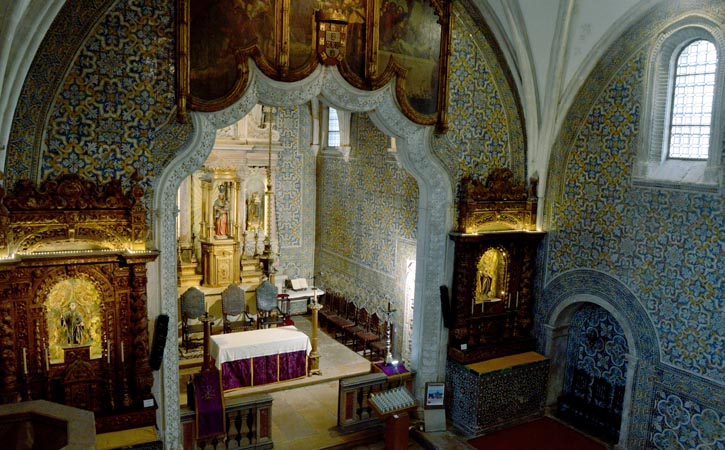
A chapel dedicated to São Jacinto, in the village of Coto.
Parish church, Coto

The 17th-century parish church of Nossa Senhora dos Anjos.
Good to know
Getting there
Caldas da Rainha is about an hour from Lisbon on the A8 motorway. The easiest way to explore the parishes is by car.
Parking
Parking is usually easy in the villages. In the city centre, use the car parks around the centre and walk.
Where to eat
You will find traditional restaurants across the municipality, and plenty more in the centre of Caldas da Rainha.
Frequently asked questions
What is there to see in the centre of Caldas da Rainha?
The Thermal Hospital, Nossa Senhora do Pópulo Church, Praça da Fruta, Parque D. Carlos I, the José Malhoa Museum, the Hospital and Caldas Museum, the Cycling Museum and the Water Garden.
Which villages belong to this parish?
Coto, about four kilometres from the city centre, and São Gregório, a rural village formerly called São Gregório de Fanadia.
Is Praça da Fruta open every day?
Yes. It is the only open-air market in Portugal that is open every day of the year.

